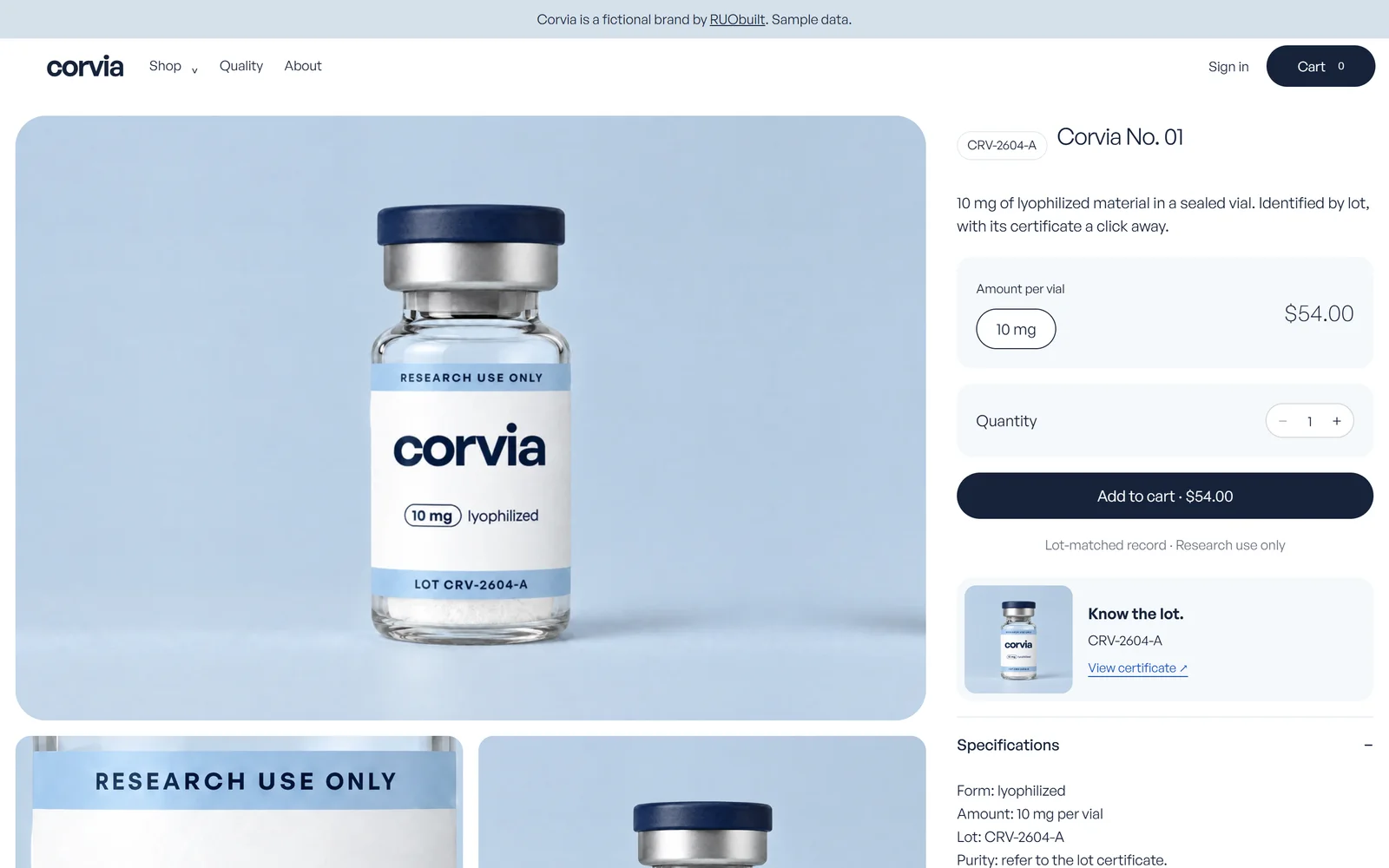
Can they tell what they're buying?
Your heading should name the product and make the selected size clear. Put the price beside the option it belongs to, where someone can read both together.
Change each option yourself and check what the page shows. If the price changes but the size label doesn't, the page leaves someone guessing. Repeat the check after adding the item to your cart.
Does the photo match the listing?
Your photo should show the label for that listing. Compare the printed name and size with the heading before you upload it.
Keep the background and crop consistent across your catalog. If you use illustrative imagery, say so clearly. A photograph doesn't establish the contents or quality of a product, even when the label is easy to read.
Where does the certificate go?
Put the certificate for the displayed lot beside the buy button. Show the lot number in the link area so the reader knows which record will open.
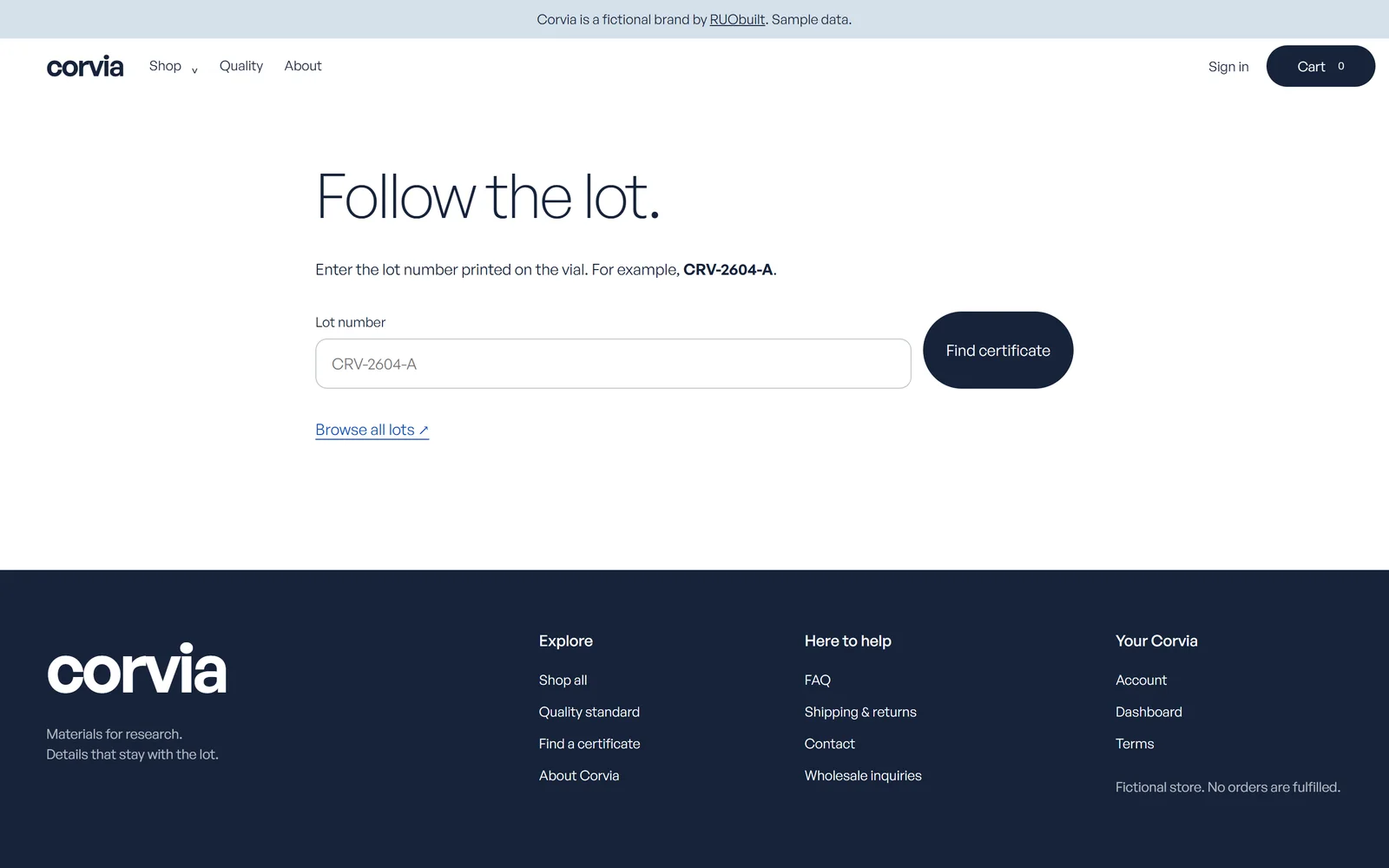
Check the number against the actual document. If the record is missing, get it before adding a link; don't fill the gap with a sample certificate. Your lookup page should explain when a lot has no matching record.
What do you say in the description?
Use the product facts you can support with your records. Keep the research-use wording visible and leave out health or body claims.
Read the description next to any image text. They need to agree, including text tucked inside expandable sections. A research-use notice doesn't establish compliance; your counsel decides which requirements apply to your business.
Can they find shipping and returns?
Link to shipping and returns near the buying controls. Someone should be able to open the full policy from this page without hunting through your menu.
Compare any short delivery message with your actual policy. Remove a promise you can't meet, and check that the contact link leads to an inbox you use.
What do you check on a phone?
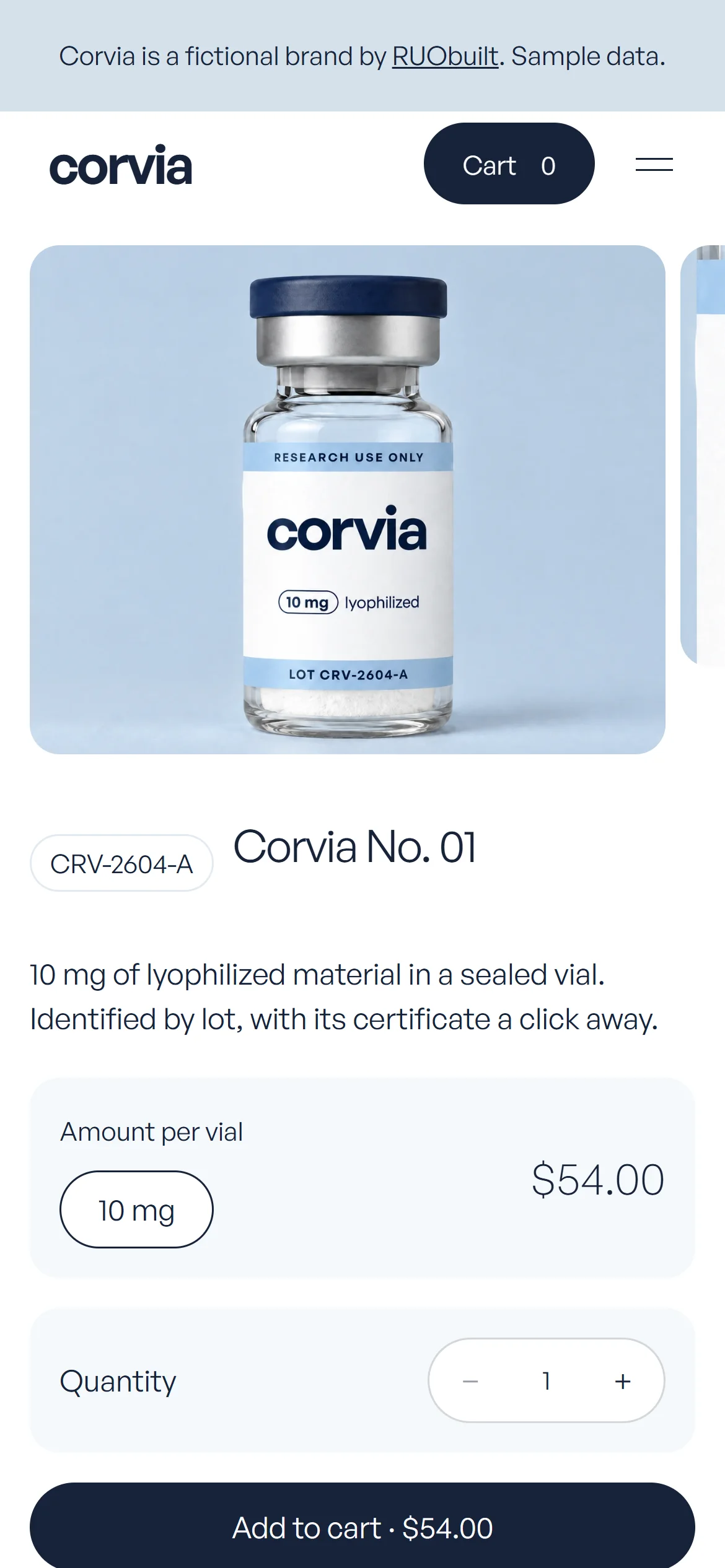
Check that the product details and options fit without sideways scrolling. Read the longest name in your catalog and try each control with your thumb.
Open the certificate from the phone itself. Return to the product and check that your selection stays put. Also try an unavailable option so you can read the message someone sees when they can't select it.
Does the cart show what they picked?
Your cart should show the same name, size and quantity as the product page. Change the quantity and check that the display updates.
Keep policy links within reach at checkout. RUObuilt makes no guarantee of processor approval or uninterrupted processing.
What do you check before calling it finished?
Run through these checks with a real listing from your catalog.
- Compare the photo label with the heading.
- Select each size and read its price.
- Open the actual lot certificate.
- Read the policies on your phone.
What else might you want to know?
Here are the other questions to settle before you change your store.
Should the certificate sit beside the buy button?
Yes. Show the lot number there and link directly to its document.
Can I reuse a product photograph?
Only when it accurately represents the listing. Don't show a different label or size.
Does a research-use notice cover everything?
No. You need accurate wording across the page and legal review for your own business.
Do I copy every policy onto the page?
No. Use clear links and keep any short summary consistent with the full policy.
What does a finished build look like?
You can open the Meridian fictional demo store and Corvia fictional demo store to see our work, both shown with sample data. Your build follows the agreed scope and the information you supply.
Full brand identity is a separate scope, included in Flagship. We make no guarantee of compliance or any business outcome.
Your store and everything specific to it: the custom code, the design, the product images, the content, and the database, assigned to you once final payment clears. The repository, deployment project, database and email accounts transfer into accounts you own and control.
The reusable platform components underneath, the ones we build every store on, stay ours. You get a perpetual, royalty-free licence to use them inside your store, for your own business, forever. The only thing you can't do is resell them or use them to build stores for other people.
Third-party components keep their own licenses; the agreement's rights revert if a payment is reversed. There's no recurring licence fee, and you pay your own providers after handoff. Included services end on fixed dates; paid add-ons are separate and opt-in.